
George Washington's
Legacy
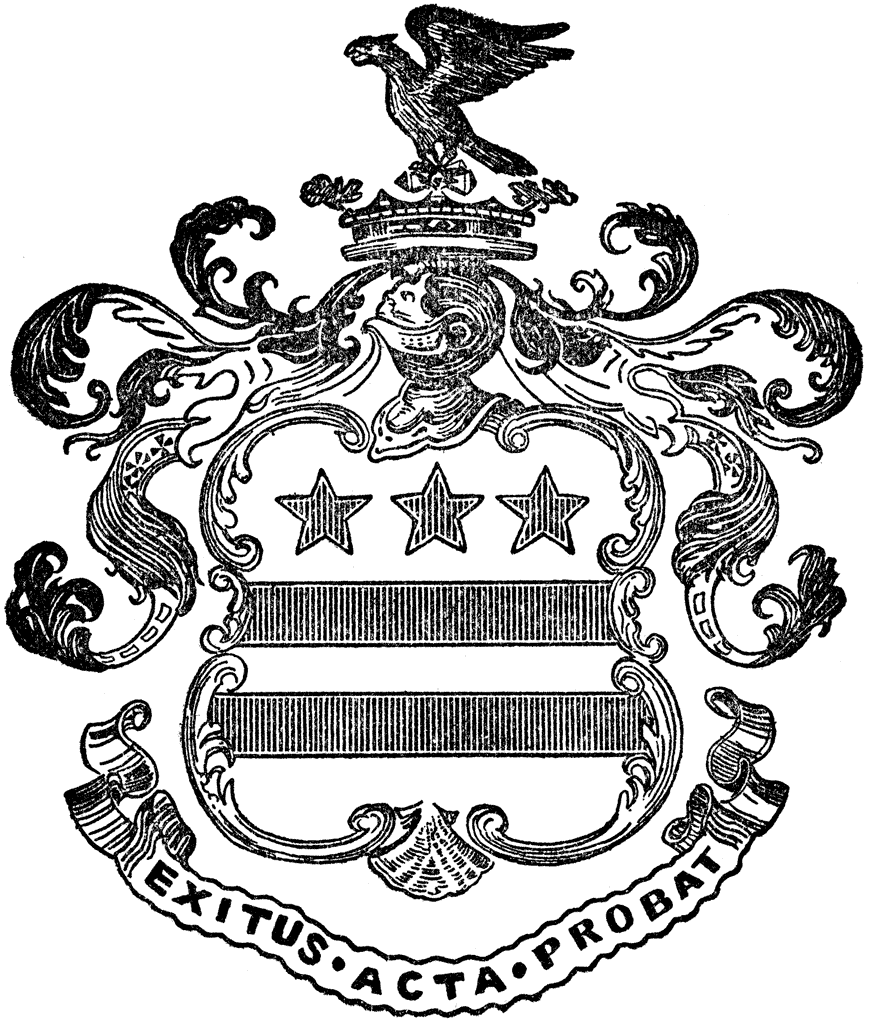
George Washington's legacy stands as the foundational pillar of American nationhood, forever earning him the revered title of "Father of His Country" because of his unparalleled contributions to the birth and survival of the United States. As commander-in-chief of the Continental Army, he led a ragtag force of citizen-soldiers through eight grueling years of war, displaying extraordinary resilience, strategic brilliance, and inspirational leadership that ultimately secured independence from the world's most powerful empire. After the Revolution, he presided over the Constitutional Convention of 1787 with calm authority, lending his immense prestige to the creation of a stronger federal government, and then became the unanimous choice of the Electoral College to serve as the nation's first president from 1789 to 1797. In that role, he established enduring precedents that shaped the presidency itself: he created the cabinet system, asserted executive authority in foreign affairs, maintained neutrality in European conflicts, and promoted national unity at a time when regional divisions threatened to tear the young republic apart.
Perhaps most remarkable of all was Washington's deliberate choice to limit his own power. After leading the army to victory, he resigned his commission in 1783 and returned to private life at Mount Vernon, an act that astonished the world and demonstrated his commitment to republican ideals over personal ambition. Eight years later, he voluntarily stepped down from the presidency after two terms, rejecting calls to remain in office indefinitely and setting a powerful example of peaceful, democratic transition that became a defining feature of American governance—later codified in the 22nd Amendment. These decisions helped ensure that the presidency would remain an institution of the people rather than a pathway to monarchy or dictatorship.
Washington's legacy remains profoundly important in the modern era because he personified the civic virtues—integrity, humility, self-discipline, and selfless devotion to the public good—that are essential to the health of any democracy. In an age when the new nation was fragile and untested, he provided a unifying symbol and a model of leadership that placed the country's welfare above personal gain. His example continues to inspire generations of Americans to value democratic principles, respect the rule of law, honor peaceful transfers of power, and recognize that the strength of the nation lies in its institutions and shared ideals rather than in the dominance of any single individual. Even today, Washington's life serves as a timeless reminder of what principled leadership can achieve and why the preservation of those principles remains vital to the republic he helped create.

George Washington's Signature